Email deliverability plays a crucial role in the success of any email marketing or transactional email strategy. However, many businesses face situations where their emails are blocked or temporarily rejected by major email service providers due to low sending reputation or suspicious sending behavior. Large mailbox providers such as Gmail, Outlook, Yahoo Mail, and other enterprise email systems continuously monitor incoming email traffic to protect users from spam, phishing, and unwanted messages.
When an email provider detects unusual sending patterns or identifies a domain with poor reputation, it may return warning or rejection messages such as “unusual rate of unsolicited mail,” “low reputation sending domain,” or “temporarily rate limited due to suspected spam activity.” These responses indicate that the receiving server does not fully trust the sender and has applied restrictions to protect its users.
For businesses relying on email communication, encountering these reputation-based email blocks can significantly affect marketing campaigns, transactional notifications, and customer engagement. Understanding why these errors occur and how mailbox providers evaluate sender reputation is essential for maintaining strong email deliverability and inbox placement.
FIn this article, we will explore the most common email blocking errors related to low sender reputation, explain why they occur across major email providers, and discuss practical steps to prevent these issues and maintain a healthy sending reputation.
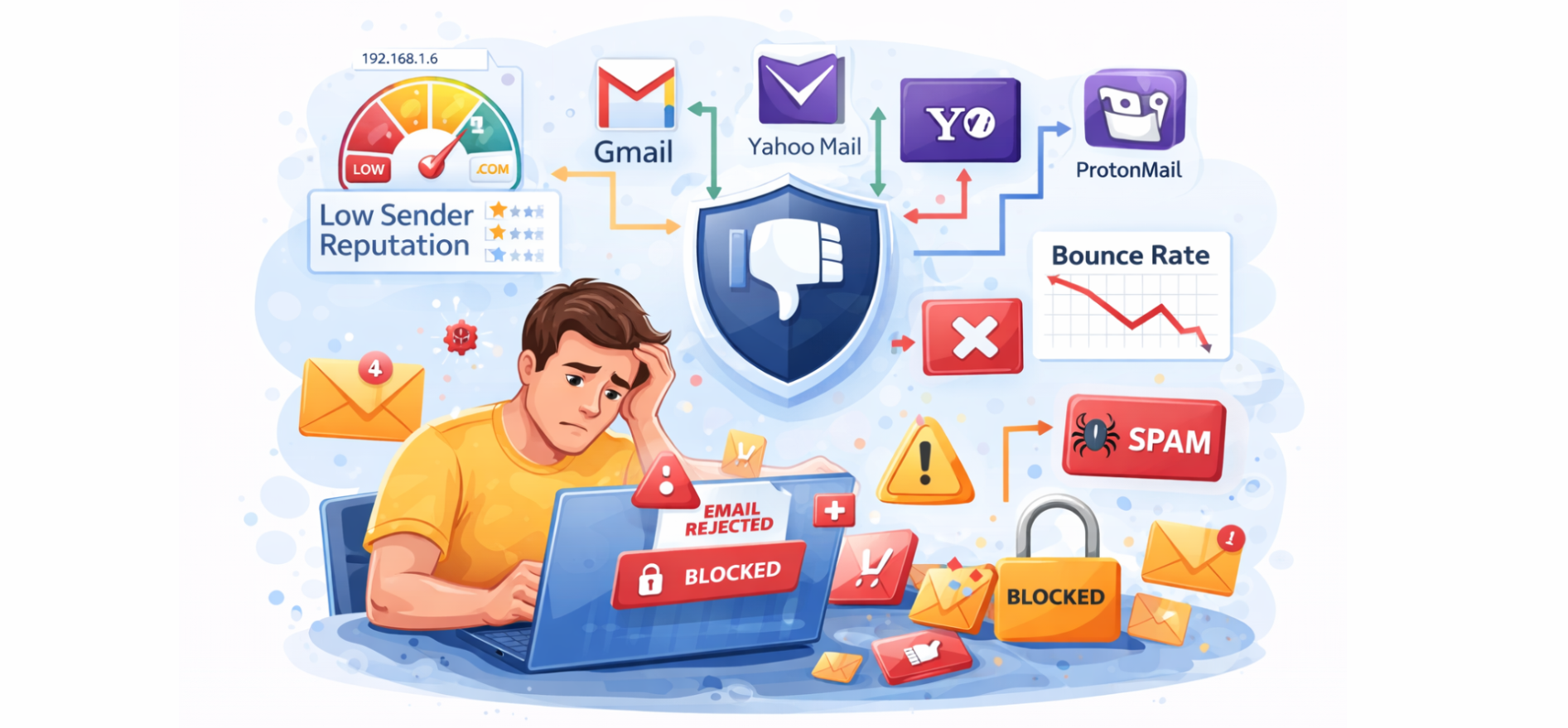
Major mailbox providers such as Gmail, Outlook/Hotmail, Yahoo Mail, and Apple iCloud rely heavily on sender reputation systems to determine whether an email should be trusted. One of the most important signals these systems analyze is the reputation of the sending domain and the sending IP address.
Sender reputation is developed over time based on the historical performance of a domain’s email activity. Email providers evaluate signals such as authentication reliability, previous delivery behavior, complaint history, and recipient engagement patterns to determine whether a sender should be considered trustworthy.
For businesses relying on email communication, encountering these reputation-based email blocks can significantly affect marketing campaigns, transactional notifications, and customer engagement. Understanding why these errors occur and how mailbox providers evaluate sender reputation is essential for maintaining strong email deliverability and inbox placement.
When a domain’s reputation falls below an acceptable threshold, mailbox providers may begin restricting email delivery. In these situations, emails may be filtered into spam folders, temporarily rejected, or blocked entirely with SMTP error messages indicating low sender reputation or poor domain trust.
Below is an overview of how major email providers handle reputation-based email blocking.
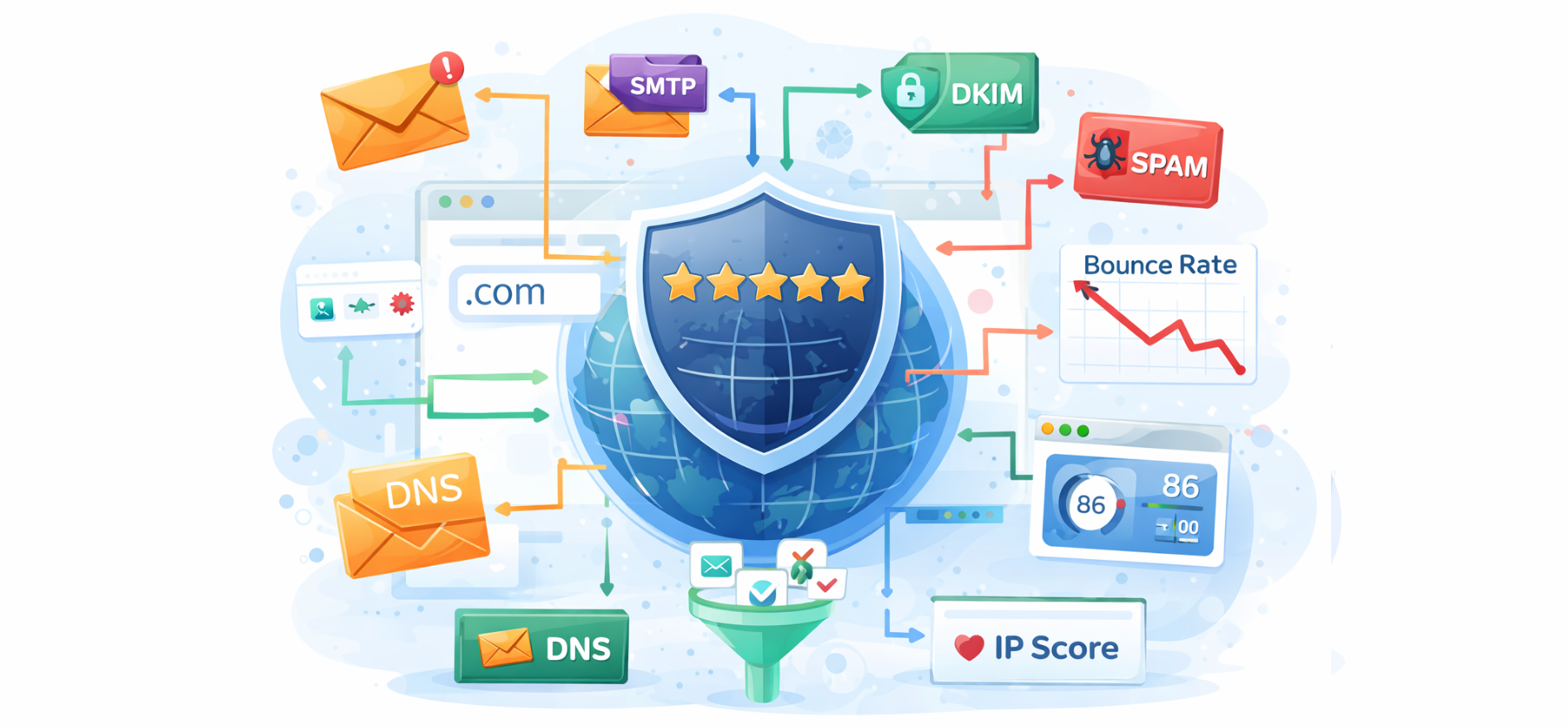
Gmail uses an advanced filtering infrastructure that evaluates the reputation of both the sending domain and the sending IP address before accepting messages. When Gmail’s systems detect that a domain has developed a low reputation, the platform may block the email connection before the message is delivered.
Sender reputation is developed over time based on the historical performance of a domain’s email activity. Email providers evaluate signals such as authentication reliability, previous delivery behavior, complaint history, and recipient engagement patterns to determine whether a sender should be considered trustworthy.
For businesses relying on email communication, encountering these reputation-based email blocks can significantly affect marketing campaigns, transactional notifications, and customer engagement. Understanding why these errors occur and how mailbox providers evaluate sender reputation is essential for maintaining strong email deliverability and inbox placement.
When a domain’s reputation falls below an acceptable threshold, mailbox providers may begin restricting email delivery. In these situations, emails may be filtered into spam folders, temporarily rejected, or blocked entirely with SMTP error messages indicating low sender reputation or poor domain trust.
These errors typically occur when Gmail’s reputation system identifies that the domain has accumulated negative signals over time. Such signals may include poor engagement history, repeated delivery failures, or previous spam complaints associated with the domain.
When this happens, Gmail may reject the email during the SMTP connection stage, preventing the message from reaching both the inbox and the spam folder
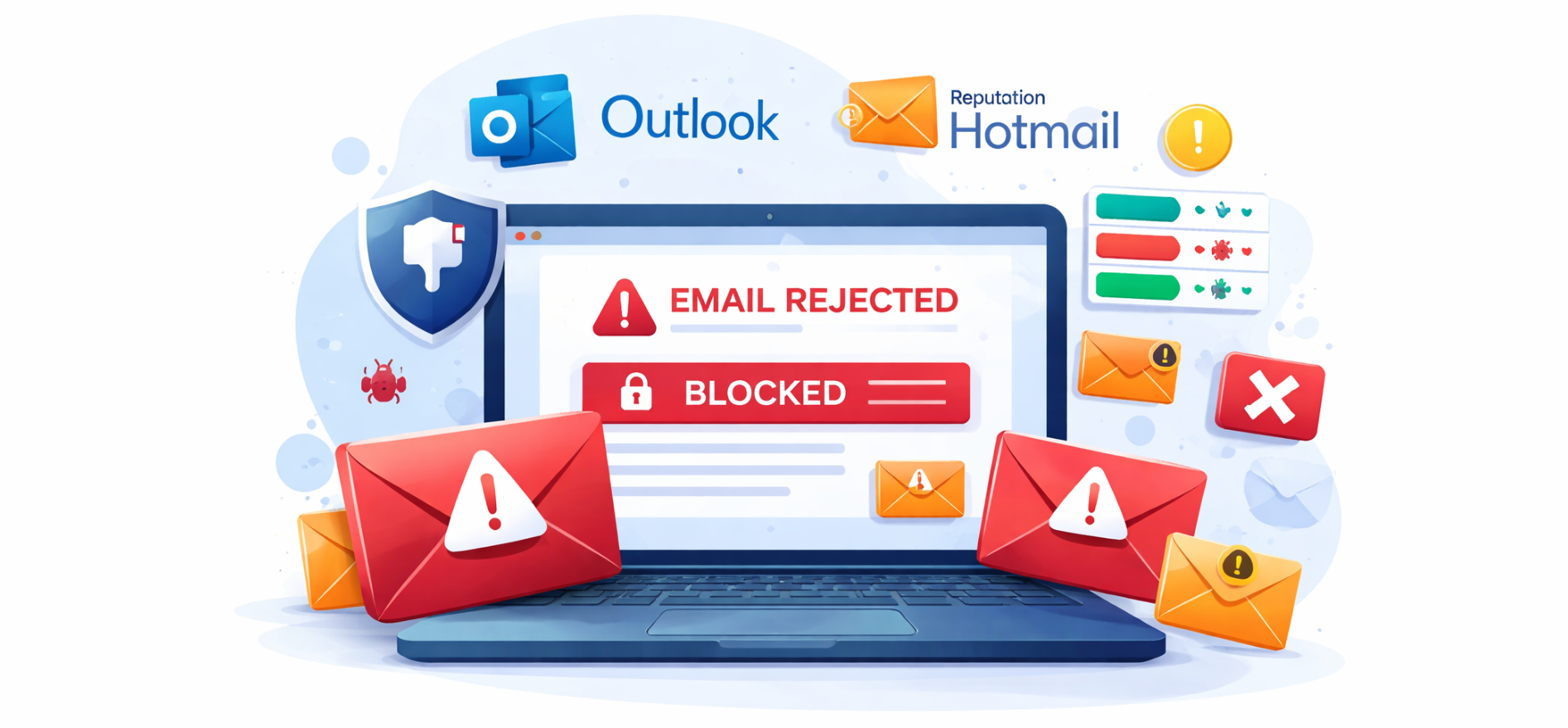
Microsoft’s email services, including Outlook.com, Hotmail, and Office365, maintain their own reputation monitoring systems to evaluate sender trustworthiness. These systems analyze the reputation of both the sending domain and the IP address to determine whether incoming messages should be accepted.
When sender reputation is considered low, Microsoft servers may respond with errors such as:
These errors indicate that Yahoo’s mail servers do not currently trust the sending domain. As a result, the email is rejected before it can be delivered to the recipient.
Yahoo’s filtering decisions are often influenced by historical reputation data associated with the domain, including prior delivery patterns, authentication reliability, and the domain’s overall email sending history.
Apple’s iCloud Mail service also applies strict reputation checks to prevent unwanted or suspicious messages from reaching users. Although Apple publishes fewer technical details about its filtering mechanisms, domain reputation remains a critical factor in how emails are evaluated.
Typical iCloud rejection messages related to sender reputation include:
These errors occur when Apple’s systems determine that the sending domain does not meet the reputation standards required for trusted email delivery. In such situations, the email is rejected during the delivery attempt and never reaches the user’s mailbox.
Because Apple places strong emphasis on domain trust and authentication consistency, senders with weak or newly established domain reputations may encounter stricter filtering.
Across all major email providers, several technical elements contribute to the reputation of a sending domain.
The most important factor is proper email authentication. Authentication protocols such as SPF, DKIM, and DMARC verify that an email originates from an authorized sender and that the message has not been altered during transmission. When these records are missing or misconfigured, email providers may treat the message as suspicious and reduce the sender’s trust level.
Another critical element is historical sender behavior. Email providers analyze long-term sending patterns to determine whether a domain consistently follows responsible email practices. Domains with unstable sending histories or previous deliverability problems may experience reduced trust from mailbox providers.
Domain reputation can also be influenced by the quality and trustworthiness of linked domains within the email content. If emails frequently link to websites with poor reputation or security concerns, mailbox providers may associate those risks with the sending domain.
Email deliverability has become increasingly sensitive as mailbox providers strengthen spam prevention systems. Gmail alone holds around 58% of the global email client market share, making it a critical factor in overall email deliverability. Because of this scale, even minor reputation issues can impact a large portion of recipients. According to industry guidelines, spam complaint rates exceeding about 0.3% can trigger filtering mechanisms, leading to message deferrals, rate limits, or delivery blocks. Maintaining low complaint rates and proper authentication is therefore essential for sustaining a healthy sending reputation.
Low sender reputation errors from major mailbox providers such as Gmail, Outlook, Yahoo Mail, and Apple iCloud can significantly impact email deliverability and disrupt communication with your users. When these providers detect that a sending domain has developed a weak reputation, they may block messages before they reach the inbox or even the spam folder. This makes it essential for businesses and email senders to actively monitor their domain reputation, authentication records, and overall email infrastructure.
The key to avoiding reputation-based email blocks lies in maintaining a trusted and consistent sending environment. Ensuring that important authentication protocols such as SPF, DKIM, and DMARC are properly configured helps receiving servers verify that your emails are legitimate and authorized. Regularly monitoring domain reputation through tools like Google Tools or similar reputation monitoring platforms can also help detect early warning signs before they develop into serious deliverability problems.
Since 2024, major mailbox providers such as Google and Yahoo have introduced stricter authentication requirements for bulk email senders. Organizations sending more than 5,000 emails per day to their users are now required to properly configure SPF, DKIM, and DMARC records to verify the legitimacy of their sending domains. These policies began rolling out in 2024 and enforcement has continued to become stricter through 2025 and 2026. Senders who fail to comply with these authentication standards may experience faster reputation degradation, higher spam filtering rates, or message rejections from receiving servers. Ensuring proper authentication is therefore a critical step in maintaining a healthy sending reputation and consistent email deliverability.
Another important step is maintaining a reliable email infrastructure and reviewing bounce reports and delivery feedback. Platforms like SMTPServer can assist by identifying the exact reason behind email rejections and categorizing reputation-related bounce responses, allowing senders to quickly diagnose issues and take corrective action.
By maintaining strong authentication, monitoring sender reputation, and responding quickly to reputation-related warnings, businesses can protect their email channels and ensure that important communications continue to reach their intended recipients. Over time, consistent and responsible sending practices will help rebuild trust with mailbox providers and improve long-term email deliverability and inbox placement.