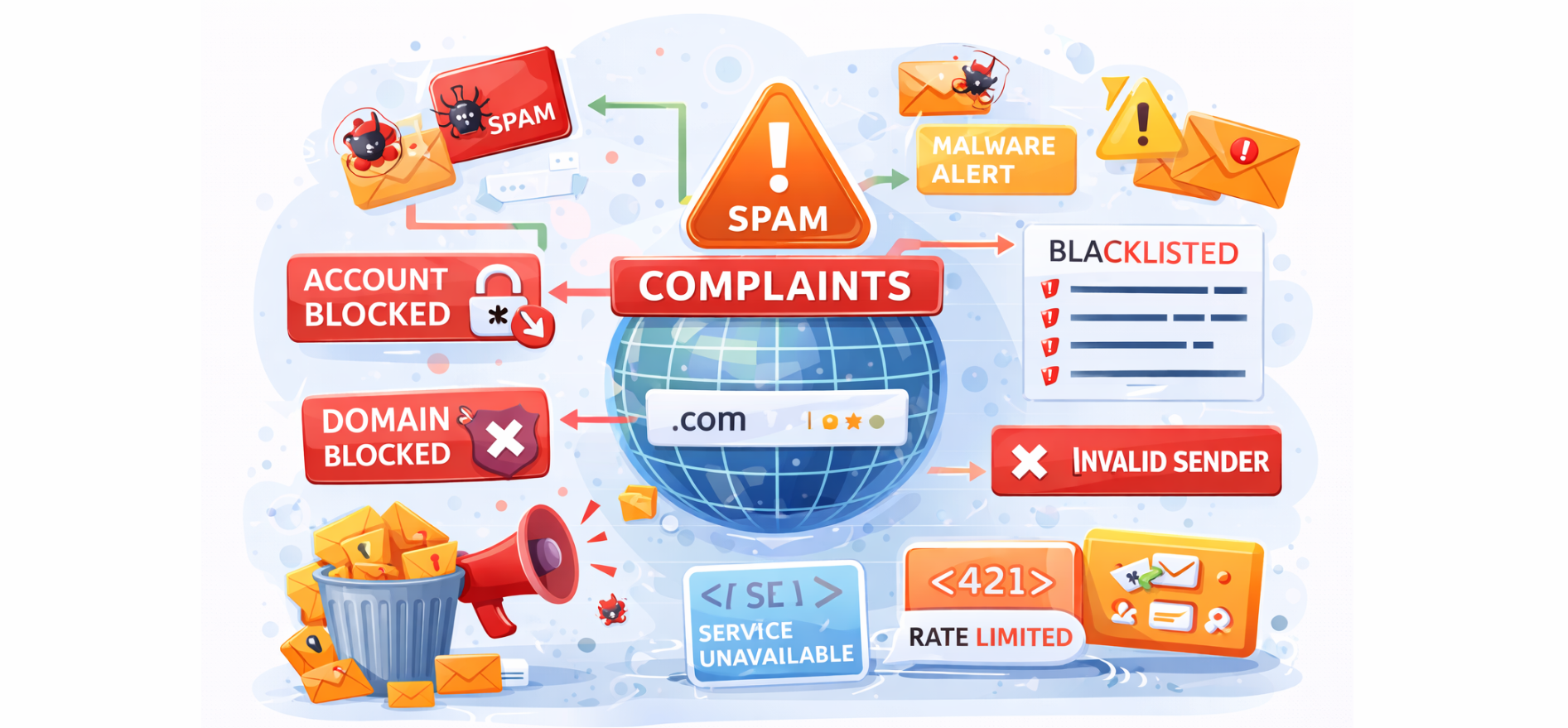
If email providers observe sending patterns that appear similar to spam activity or notice a significant number of recipients reporting messages as unwanted, they may limit or temporarily block emails coming from that sender. These measures are implemented to safeguard users from unsolicited communication and to preserve the quality and safety of the inbox environment.
Most email providers rely on user feedback signals, spam complaint rates, and behavioral analysis to determine whether a sender is distributing unwanted messages. When these indicators exceed acceptable limits, the receiving mail server may respond with particular SMTP error messages, showing that the email has either been rejected or temporarily deferred because it was identified as potential spam.
Here are several commonly encountered error responses generated by major email providers when messages are identified as unsolicited or when a sender receives a high number of spam complaints.
Gmail’s spam detection system is one of the most advanced in the industry and heavily relies on user engagement signals and complaint data. If Gmail notices irregular sending behavior or observes a rise in spam reports from users, it may temporarily limit the delivery of messages from that sender.
Common Gmail errors related to spam complaints include:
These responses indicate that Gmail’s systems have detected signals suggesting that recipients may be receiving emails they did not expect or did not request. As a safeguard, Gmail may temporarily slow down or defer messages coming from the sender until its systems confirm that the sending patterns have returned to normal.
Microsoft’s email ecosystem, which includes Outlook.com, Hotmail, and Office365, uses a reputation and complaint monitoring system known as SmartScreen filtering.
When Microsoft detects excessive spam complaints or suspicious email behavior, it may respond with errors such as:
These responses suggest that many recipients have reported the sender’s emails as spam, which leads Microsoft’s filtering system to temporarily restrict or slow down the delivery of further messages from that sender.
Yahoo Mail also closely monitors user feedback signals, particularly spam complaints and message filtering activity. If Yahoo recipients repeatedly report messages from a particular sender as spam, the platform may start limiting or blocking additional emails from that sender.
Common Yahoo errors include:
These responses typically occur when Yahoo’s spam detection system determines that the sender’s messages are receiving negative feedback from recipients.
In these situations, Yahoo may delay the delivery of the message for a period of time or decline it entirely in order to stop additional unwanted emails from reaching user inboxes.
Apple’s iCloud Mail platform also relies on automated filtering technologies along with user feedback signals to identify and filter messages that may be considered unwanted.
Typical iCloud responses include:
These responses are generated when Apple’s filtering mechanisms identify sending patterns that appear similar to spam campaigns or when multiple recipients flag the messages as unwanted. To maintain user safety, Apple generally enforces strict filtering rules to minimize the risk of spam or phishing emails reaching inboxes.
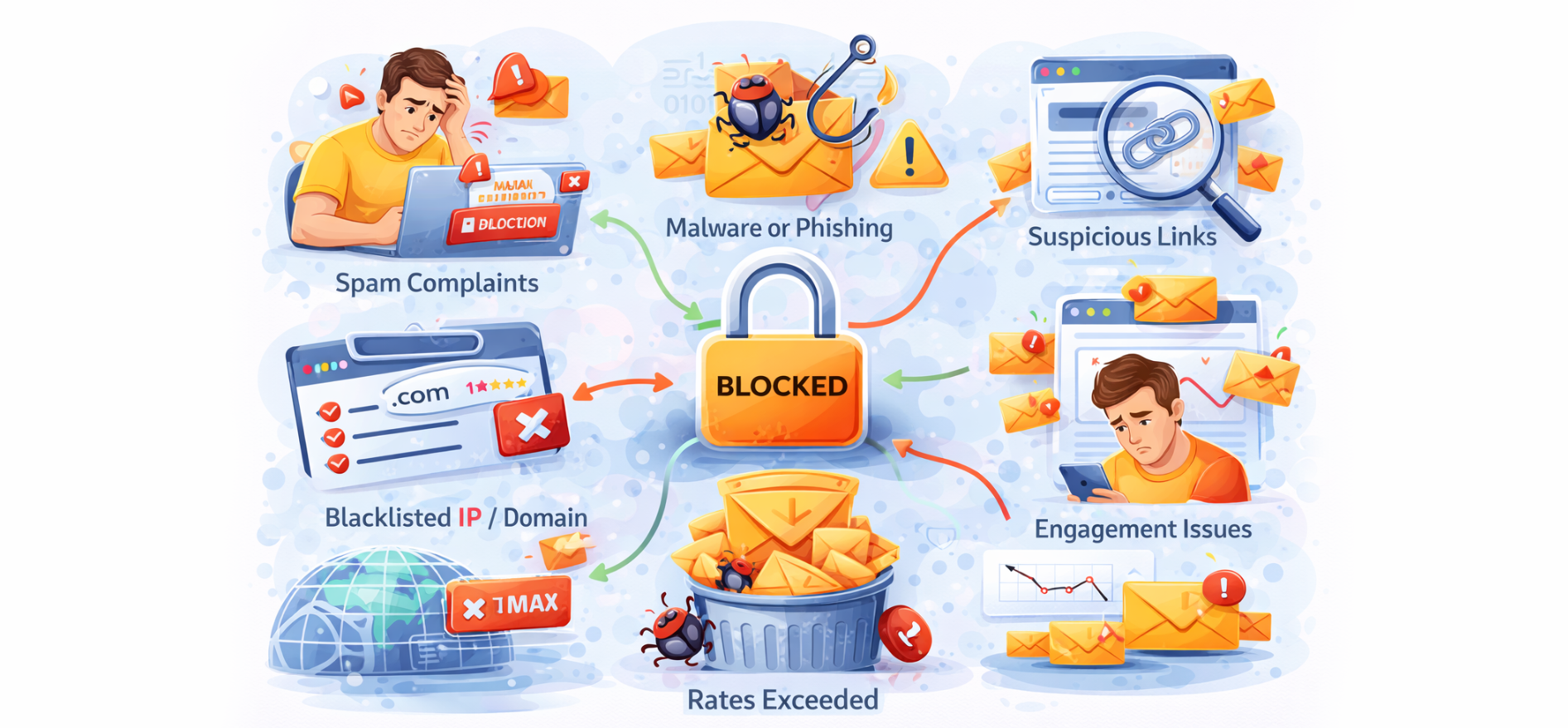
Although the exact filtering algorithms vary between providers, the most common reasons emails are blocked due to suspected spam include:
High Spam Complaint RatesWhen recipients click the “Report Spam” button, it sends a strong negative signal to mailbox providers. If too many recipients mark emails as spam, providers may temporarily block future messages from that sender.
Sending Emails Without Clear User ConsentSending emails to users who did not explicitly subscribe or opt in to receive communications often leads to spam complaints.
Poor Email List QualityEmail lists that contain outdated, purchased, or scraped addresses tend to generate complaints and negative engagement.
Misleading Subject Lines or Email ContentEmails that appear deceptive or overly promotional may trigger spam filters or encourage recipients to report the message as spam.
Lack of Clear Unsubscribe OptionsIf users cannot easily unsubscribe from mailing lists, they are more likely to mark the email as spam.
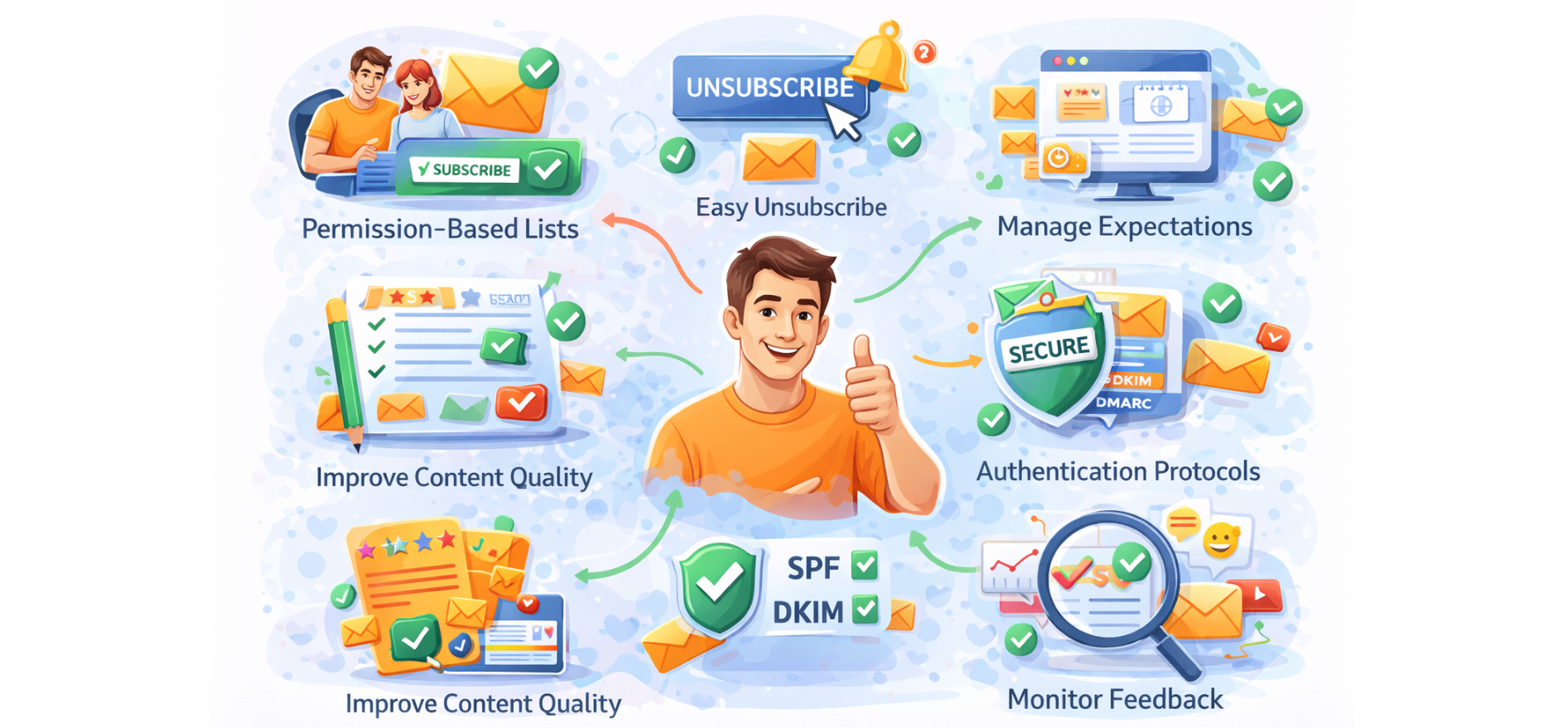
Avoiding spam-related email restrictions requires responsible sending practices and continuous monitoring of user feedback signals.
The key to avoiding reputation-based email blocks lies in maintaining a trusted and consistent sending environment. Ensuring that important authentication protocols such as SPF, DKIM, and DMARC are properly configured helps receiving servers verify that your emails are legitimate and authorized. Regularly monitoring domain reputation through tools like Google Tools or similar reputation monitoring platforms can also help detect early warning signs before they develop into serious deliverability problems.
One of the most important steps is ensuring that all recipients have explicitly opted in to receive emails. Using confirmed or double opt-in subscription processes can significantly reduce spam complaints and ensure that recipients expect your messages.
Maintaining high-quality email lists is also essential. Regularly removing inactive subscribers and invalid addresses helps prevent negative engagement signals that may trigger spam filters.
Senders should also focus on clear and transparent communication in their emails. Subject lines should accurately represent the content of the message, and every email should include a visible and functional unsubscribe option so users can easily opt out instead of reporting the message as spam.
Monitoring spam complaint rates and delivery reports is equally important. Many email delivery platforms provide detailed insights into spam complaints, bounce responses, and user feedback. These metrics can help identify potential problems before mailbox providers begin restricting email delivery.
Platforms such as SMTPServer can assist senders by providing detailed bounce classification and identifying whether an email was deferred or rejected due to spam complaints. This allows senders to quickly detect issues and adjust their sending practices to maintain healthy email deliverability.